Spray Drying Equipment

From Formulation Tool to Manufacturing Strategy: The Evolving Role of Spray Drying

Key Takeaways

  • Spray drying has become the dominant manufacturing route for amorphous solid dispersions, reflecting its central role in enabling oral delivery of poorly soluble small-molecule drugs.
  • Rising molecular complexity is driving sustained demand for advanced particle engineering, as more development programs rely on ASDs to achieve bioavailability and therapeutic performance.
  • Commercial spray-drying capacity is increasingly constrained, with long lead times for equipment, facilities, and operational expertise creating a bottleneck for late-stage programs.
  • Formulation decisions now shape manufacturing strategy, requiring sponsors to consider scalability, solvent systems, and polymer selection much earlier in development.
  • Spray drying is evolving into pharmaceutical infrastructure, differentiating companies that can reliably manufacture complex formulations at commercial scale from those that cannot.

Spray Drying as a Core Enabler of Modern Oral Drug Development

Spray drying is now firmly established as a core manufacturing route for enabling oral delivery of poorly soluble small molecule drugs. As molecular complexity increases across development pipelines, bioavailability enhancement has become a routine requirement rather than an occasional formulation challenge.

Amorphous solid dispersions (ASDs) are widely used to address these constraints, and spray drying has emerged as the dominant commercial manufacturing pathway for producing them. Regulatory precedent, expanding clinical adoption, and continued pipeline complexity have positioned spray drying as a standard element of modern oral solid dose (OSD) development. Over the past decade, ASD manufacturing has moved firmly into the commercial mainstream: 80 ASD drug products were approved by the U.S. Food and Drug Administration between 2012 and 2023.1 Commercial ASD manufacturing is concentrated primarily in spray drying and hot-melt extrusion, with spray drying widely adopted for its ability to control particle properties, accommodate thermally sensitive materials, and support scalable production.

As more programs rely on ASD-based formulations, demand for commercial-scale spray-drying capacity continues to grow. Market analyses project sustained expansion in pharmaceutical spray drying, with the global market expected to grow at approximately a 7% compound annual growth rate between 2026 and 2031.2 The ability to translate laboratory success into reliable large-scale production has therefore become a defining operational consideration. Spray drying sits not only at the center of formulation science but increasingly at the center of manufacturing strategy, functioning as a foundational capability for modern oral drug development.

From Formulation Technique to Manufacturing System

Spray drying is often discussed in terms of formulation performance, but commercial supply depends on far more than the spray dryer itself. The drying unit operation is only one component of a tightly integrated manufacturing environment that must support solvent handling, containment, recovery, process control, safety systems, and validated material flows across upstream and downstream operations. Reliable commercial production requires this entire ecosystem to function as a coordinated whole.

Commercial-scale solvent-based spray drying introduces infrastructure requirements that extend well beyond standard OSD manufacturing. Facilities must incorporate explosion protection, closed-loop solvent recovery, environmental controls, industrial-scale utilities, and specialized waste management. These systems must operate continuously, meet regulatory expectations for pharmaceutical manufacturing, and remain stable across large commercial campaigns. Building and qualifying this environment requires significant capital expenditure and complex engineering, best served by purpose-designed facilities rather than retrofitted production space.

Organizational and quality systems capable of supporting routine commercial supply are equally critical. Spray-dried ASD manufacturing requires validated processes, reproducible scale-up, established deviation management practices, and teams with the expertise and experience to ensure that consistent performance and product attributes are maintained across batches and campaigns. Long-term operational reliability depends not only on technical knowledge of spray drying, but also on accumulated manufacturing experience, including the ability to run campaigns repeatedly, manage variability, and sustain performance over time.

Because the spray dryer itself is only a fraction of the required infrastructure, establishing internal commercial spray-drying capability is not a one-off equipment investment. It requires integrated facility design, specialized workforce expertise, and mature quality and operational systems built specifically around solvent-based particle engineering. These requirements create substantial barriers to entry and long implementation timelines.

For many drug developers, outsourcing commercial spray drying is therefore not simply a matter of convenience but of structural efficiency. Dedicated manufacturing organizations that operate large-scale spray-drying facilities are designed around the infrastructure, regulatory framework, and operational discipline required for sustained commercial production. Their facilities, quality systems, and technical teams are already aligned with the demands of high-volume solvent-based manufacturing.

This distinction also separates contract development and manufacturing organizations (CDMOs) with established commercial spray-drying operations from those historically focused on early development. Development-scale spray drying emphasizes flexibility and rapid iteration, while commercial manufacturing depends on infrastructure robustness, validated processes, and long-term operational continuity. Transitioning from development services to reliable commercial supply requires an organizational model built around sustained manufacturing performance.

With spray drying becoming increasingly integral to modern drug development, commercial production is increasingly concentrated in facilities designed specifically for large-scale operation. The primary constraint is no longer the technology itself but access to integrated manufacturing infrastructure capable of supporting consistent commercial supply.

The Capacity Funnel: Why Scaling Is Harder Than It Looks

As spray drying has advanced from a niche formulation tool into a core manufacturing capability, a structural imbalance has emerged between demand and available capacity. At early development scale, access to spray drying is widely available. Small systems can support feasibility studies and early clinical supply relatively inexpensively and without placing heavy strain on infrastructure. However, this changes as programs advance toward commercial volumes. Larger solvent-based spray-drying systems are fewer in number, and the technical and regulatory requirements to operate them narrow the field of viable manufacturing sites.

This creates a capacity funnel. Many projects can enter at the top, but only a limited number can pass through to sustained commercial production. Bringing new large-scale spray-drying assets online is not a short-term exercise. Equipment procurement alone can take years, and facilities must be designed and built for efficient material flows, solvent handling, containment, and safety systems before qualification and routine operation can begin. These timelines mean that capacity decisions are often made well in advance of clinical or commercial inflection points.

Compounding the challenge is the way demand concentrates. Large, high-volume programs tend to secure capacity early and for long durations, which can crowd out smaller or later-arriving projects. In practice, capacity is frequently committed before equipment is fully operational, and schedules can shift when a major program requires priority access. This dynamic introduces uncertainty for sponsors who assume that manufacturing slots will remain available when they reach late-stage development.

This requires a shift in how we view capacity. What was once treated as a downstream operational concern has become a strategic variable in development planning. Formulation success alone no longer guarantees manufacturability at scale; sponsors must now consider whether the infrastructure needed to support their chosen approach will exist when it is needed and whether it can be secured without disrupting timelines. The constraint, in other words, is not the viability of spray drying but the difficulty of executing it reliably and repeatedly at commercial scale.

Implications for Developers: Planning Beyond the Formulation Problem

The growing reliance on spray drying and ASD manufacturing changes what it means to make an early formulation decision. Choices that appear technical in phase I, such as solvent systems, polymer selection, and target particle attributes, can shape manufacturability years later. A formulation that performs well in the laboratory may encounter obstacles when translated into large-scale production if its underlying design does not account for solvent recovery, throughput limitations, or operational robustness. As such, formulation strategy and manufacturing strategy are no longer separable.

This places greater emphasis on anticipating commercial realities during development. Solvent choice is not only a question of solubility and stability but also of safety systems, regulatory expectations, and long-term sustainability. Polymer systems that perform well in small batches must also be compatible with high-volume processing and consistent downstream tableting. Process design must balance flexibility with repeatability so that scale-up does not require fundamental reengineering. This requires a shift in focus from solving today’s bioavailability problem to designing tomorrow’s supply chain.

Risk management also begins earlier. As commercial-scale spray-drying capacity becomes more constrained, reliance on a single manufacturing pathway carries greater exposure. Second-source strategies and life cycle planning are increasingly part of development discussions rather than contingencies to be addressed after approval. Drug developers must evaluate not only whether a formulation can be made, but where it can be made, how reliably, and under what timeline assumptions. Capacity diversification, formerly considered to be an optimization step, is becoming a structural requirement for programs built on advanced particle engineering.

Successful programs are those that treat spray drying not as a corrective measure for poor solubility but as a platform that must be supported by aligned scientific, engineering, and operational decisions. The implication for sponsors is straightforward but demanding: formulation choices now carry manufacturing consequences that extend across the product life cycle, and those consequences must be addressed deliberately rather than discovered late in development.

Codis: A Dedicated Commercial Manufacturing Partner for Large-Scale Spray Drying

As commercial spray drying becomes increasingly concentrated in specialized facilities, the defining differentiator among manufacturing partners is their ability to operate reliably at commercial scale. Only a relatively small number of facilities globally operate commercial-scale, solvent-based spray-drying systems qualified for sustained pharmaceutical production, and even fewer are designed specifically for routine commercial supply. Long equipment lead times, complex facility requirements, and the need for experienced operating teams make new capacity slow to develop. As a result, access to established commercial spray-drying infrastructure is constrained, particularly for programs transitioning into late-stage development or preparing for market launch. Codis is structured specifically around this requirement, with an operating model built to support sustained commercial supply rather than early-stage formulation development.

The company’s foundation is long-term commercial manufacturing experience. Decades of production across complex spray-dried products have shaped mature quality systems, established operational practices= and organizational structures designed for consistency, repeatability, and regulatory compliance. This experience extends beyond technical process knowledge to the practical realities of commercial supply: managing campaigns at scale, maintaining and improving validated processes over time, and delivering predictable product quality across batches and markets.

Codis’ facilities reflect this commercial focus. Large-scale spray drying is supported by extensive infrastructure for solvent handling, containment, recovery, and environmental control, along with the utilities, safety systems, and process integration required for routine pharmaceutical manufacturing. These supporting systems, which are typically the most difficult and time-consuming elements to establish, are embedded within the manufacturing environment.

Technical transfer and scale-up are central to this model. Transitioning spray-dried products from early development or pilot scale into commercial production requires process understanding, engineering alignment, and structured transfer protocols that preserve particle characteristics and product performance at scale. Codis’ manufacturing organization is designed to support this transition, providing established pathways for transferring processes into validated commercial operation while maintaining continuity of product quality and supply.

Within the spectrum of commercial spray-drying capacity, systems such as Codis’ PSD2 production spray dryer operate between development-scale equipment and larger high-throughput commercial units. The platform supports intermediate commercial batch volumes while maintaining flexibility across solvent systems and process conditions commonly required for ASD manufacturing. This operating range allows manufacturers to produce material at scales suitable for late-stage clinical supply, product launch, and lower-volume commercial products without requiring immediate transition to the largest commercial installations. The result is greater scale flexibility and more efficient alignment between production capacity and program demand.

This positioning allows the PSD2 to function as a practical bridge between late-stage development and early commercial supply. Programs can transition from pilot or clinical manufacturing into sustained production without an immediate shift to the largest commercial platforms. Facilities operating at this scale can support repeated manufacturing campaigns, production of launch inventory, and supply for early market demand while maintaining process continuity established during scale-up. This reduces the operational disruption and technical risk often associated with large step-changes in manufacturing scale.

A key element of this commercial platform is the company’s large-scale production spray dryers, including the PSD4 system. Currently under construction, and purpose-built for commercial manufacturing, the PSD4 incorporates advanced process control, containment, and safety capabilities designed to support highly potent compounds, including operation at OEB4 containment levels. The system reflects current engineering standards for large-scale solvent-based spray drying, enabling consistent production of complex ASDs under tightly controlled operating conditions.

Codis is purpose-built for commercial manufacturing, with infrastructure, operational systems, and technical expertise aligned specifically around reliable large-scale spray-dried production. By concentrating resources on sustained commercial supply rather than early-stage development, the company maintains facilities, quality systems, and organizational capabilities designed for consistent execution over time. Combined with extensive manufacturing experience and established scale-up and technical transfer pathways, this specialization positions Codis as a dedicated commercial supplier for spray-dried pharmaceuticals. In an environment where commercial spray-drying capacity is limited and scale transitions can introduce significant operational risk, this model provides a manufacturing platform designed to reduce program risk by supporting regulatory readiness, operational stability, and long-term supply continuity.

Conclusion: Spray Drying as Strategic Infrastructure

The trajectory of ASD-based products suggests that spray drying will remain a central and growing feature of pharmaceutical development rather than a transitional solution. Regulatory approvals over the past decade show a steady presence of ASD formulations across therapeutic areas, reflecting their role as a standardized response to solubility and bioavailability challenges in modern small-molecule pipelines. Market projections reinforce this pattern, pointing to continued growth in pharmaceutical spray drying as advanced particle engineering becomes more deeply embedded in development strategies.

However, the expansion of manufacturing capability does not move at the same pace as scientific adoption. Commercial spray-drying systems require significant investments, long lead times for equipment procurement, facility readiness, and operational qualification. Expertise accumulates through repeated execution rather than rapid scaling, creating a persistent gap between rising demand and available capacity. This imbalance is likely to persist even as new investments come online, making manufacturing readiness a defining constraint rather than a secondary consideration.

As a result, spray drying is becoming a differentiator in the commercialization of complex small-molecule therapies. The competitive divide is shifting away from who can design sophisticated formulations toward who can manufacture them reliably and consistently at scale. Particle engineering decisions increasingly shape not only bioavailability but also supply continuity, scalability, and life cycle management.

More broadly, the evolution of spray drying signals a structural change in how the industry approaches complex molecules. What began as a technical solution has become part of pharmaceutical infrastructure, requiring sponsors to treat advanced formulation not as a development fix but as a manufacturing strategy integral to long-term product success. Codis exemplifies the specialized commercial manufacturing model required to deliver reliable large-scale spray-dried production in an increasingly infrastructure-constrained environment.

References

1. Moseson, Dana E, et al. “Trends in amorphous solid dispersion drug products approved by the U.S. Food and Drug Administration between 2012 and 2023.” Int. J. Pharm. X. 3:7:100259 (2024).

2. Pharmaceutical Spray Drying Market Size & Share Analysis – Growth Trends and Forecast (2026 – 2031). Mordor Intelligence. 2025.

Originally published on PharmasAlmanac.com on March 11, 2026.
Providing Solutions at Fair Value: A Spray Drying Case Study

Pharmaceutical companies need CDMO partners that provide solutions at fair value. Fareva has a long history of investing in new technologies with innovators to help our customers achieve their goals, and one recent example is the construction of a new Hastelloy spray-drying unit.

A Spray-Drying Problem

A few years ago, Fareva entered into discussions with an innovator that was single sourced for a highly specialized, spray-dried API quickly moving toward an NDA filing after very positive clinical trials. The sponsor needed to ensure a continuous supply of the API, but being single sourced highlighted a limitation in their supply strategy should volumes grow or unforeseen supply interruptions occur. Due to the unique physical properties of their API, the sponsor believed that there could be campaigning advantages with a Hastelloy spray dryer. Unable to find a suitable existing unit but needing to establish a dual-source supply chain for a key product, the sponsor sought to find a high-quality CDMO willing to oversee the design, construction, and installation of specialized equipment. The sponsor needed to find a partner who would support the project from R&D to submission and to commercial supply.

Establishing a Partnership

The sponsor set out to find a contract service provider that would be willing to work as a true partner in order to develop a second source. Fareva was initially approached as a potential partner because Fareva has years of experience developing and implementing aqueous spray-drying processes, and the sponsor was familiar with our commitment to collaboration and transparency.

Implementation of this project would involve an extension of our capabilities, given that we had not previously performed solvent-based spray drying. Due to the nature of the process, control measures would need to be implemented, and the sponsor required the construction of a special Hastelloy spray dryer.

As such, we understood that the sponsor would investigate and determine whether another provider could offer a better fit in terms of cost and timing. In addition to Fareva, several CDMOs prepared proposals. The sponsor appreciated Fareva’s comprehensive proposal, which not only systematically addressed each program requirement but also provided a win–win payment structure that had a balance of up-front costs and back-end milestone payments. As a family-owned company with a flat management organization, Fareva has the flexibility to offer innovative financial packages with a simplified approval process and a long-term perspective for projects that we feel have significant potential to expand our specialized capabilities. Fareva won the RFP based on our historical experience, the familiarity of the customer with our Valdepharm site and team, our comprehensive approach to addressing the sponsor’s requirements, and the willingness of Fareva to co-invest in the new spray-drying unit.

Despite the complexity of the project, the negotiations took just six months. The sponsor was honest and transparent about the capabilities it could bring to the table, and Fareva was transparent with our costs and capabilities. As a result, within 12 months of the initial sponsor’s request, a contract was completed and the project started. The sponsor found the experience to be straightforward and transparent, with equitable construction of the contract. In this situation, both parties shared the risk and the investment, but also benefited from some guarantees. Construction of this new spray-drying unit was initiated in May 2018 and will be completed in Q1 2020, with qualification and validation expected to be finalized in Q3 2020, followed by commercial production of the sponsor’s approved product.

Finding Collaborative Partners

The need for a Hastelloy spray dryer led to the need for a custom-designed unit. After speaking with several design firms, Fareva selected the company that was most open and transparent about the design and cost and willing to work collaboratively.

Our engineering and technical experts at the Valdepharm site work closely with both the sponsor and the design firm to address details related to the reactor, pump, filter dryer, and other components. More than 100 changes were made to the design over a 5–6 month period before arriving at the final design. The open, collaborative design review process for the spray dryer impacted how the entire suite was designed. The overall result was an optimal spray dryer and operating unit, not only for the sponsor, but as general-use equipment.

Specialized Spray Drying Solution

The new spray-drying unit is located at Fareva’s Valdepharm site, a state-of-the-art facility in Normandy, France approved by global regulatory authorities, including the U.S. FDA, EMA, ANVISA, and others. The site manufactures APIs, including sterile powders, steroids, and controlled substances, as well as sterile injectable drug products.

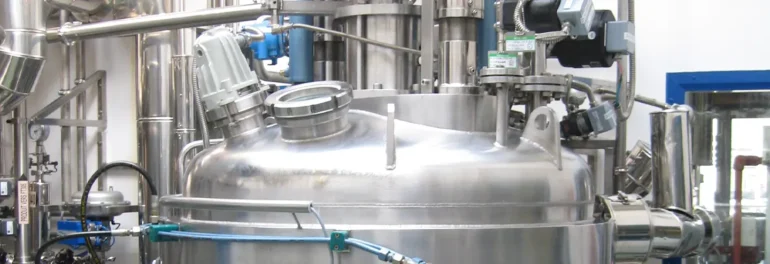
The system is designed according to cGMP requirements for the handling of both organic and aqueous solutions. It is resistant to corrosive and acidic materials and designed to safely process potent compounds. Processes can be run in air or under nitrogen. With an average capacity of 25 kg/h, depending on the concentration of the solution, batch sizes can range from 100 kg to 1 tonne.

Once spray drying is complete, products can be packaged directly or undergo further processing before packaging, such as secondary drying in a filter dryer and/or milling to achieve the desired particle size/particle size distribution.

The unit is supported by our in-house process development, QA/QC, and microbiological laboratories.

People Make the Difference

Having the facilities, equipment, and capacity to produce APIs, even for APIs that require specialized technologies, such as spray drying, is not sufficient for establishing real differentiation as a CDMO. Having the right people is also essential. Fareva recognizes this critical fact and has sought out individuals that are dedicated to projects, are invested in the customer’s best interest, and value open and transparent communication.

Teams composed of individuals with this level of commitment create, over the length of a project, the highest likelihood for success. All information is known and shared, and the customer is kept up to date in real time about all aspects of the project, including problems that arise. Customers realize that the human element at Fareva contributes substantially to risk mitigation. Our teams are led by a project manager who is the main point of contact throughout the lifetime of the project, and every member of each project team is fully engaged and in communication with the customer.

R&D Investment

In addition to the commercial spray-drying unit, Fareva has invested in an R&D-scale spray dryer that will enable our process development experts to efficiently establish the appropriate design space, identify critical process parameters, and develop optimal processes.

Already Attracting Attention

We recognize that taking on this project involves expansion of our technology and capabilities, which carries some risk. Fareva has a history of investing in innovative technologies and a well-established process for performing methodical gap analyses to determine what capabilities and human resources are needed when moving into new technical areas.

Indeed, Fareva has a reputation for being able to successfully develop and implement new technologies for customers. This track record, combined with our open and transparent approach to project management and our permanent staff of experienced chemical engineers, creates a level of comfort for customers familiar with the Valdepharm site and our experience, capabilities, and personnel.

Validation of a second product is expected in Q4 2020. Combined, these two products will account for less than 50% of the capacity and, beginning in the second half of 2020, we will be able to take on additional projects.

A True Solution Provider

In the case of the spray-drying unit, we listened to our customer and worked together with their experts to develop an industry-leading technical capability in spray drying that can support a wide range of products, including corrosive materials.

The investment in the new spray-drying unit is just one example of Fareva’s willingness to collaborate with customers to solve their GMP manufacturing challenges. Whether the solution involves an investment in new technology, the addition of R&D capabilities, the modification of existing equipment, or some other activity, we have the desire and ability to act as a true solution provider for our customers. We are capable and willing to support customer projects at a fair value, serving as a true partner.

Originally published on PharmasAlmanac.com on March 17, 2020.

Dry-Powder Inhalation Formulation: Balancing Performance and Manufacturability

There is growing demand for dry-powder inhalation formulations of drugs to treat both respiratory and systemic diseases. Composite particle technology is allowing the development of more efficient formulations, even for challenging molecules. Spray drying is an  enabling technology for composite particle preparation. Formulators must be aware, however, of the tradeoffs between properties that improve aerodynamic performance in the lung but negatively impact  process yields or throughputs.

Growing importance of composite particle technology

Traditional DPI formulations are physical mixtures of a coarse carrier and micronized API with an aerodynamic particle size of 1 to 5 microns. It is important to note that understanding the properties of the API — as well as any excipients that are used and their possible interactions — is key to the successful formulation of drugs for use in dry-powder inhalers. Precise control of capsule filling once the carrier and API are blended together in the final formulation is also crucial. DPI drugs are typically formulated at very low doses; the filling process must be very precise in order to ensure accurate dosing. 

While use of a carrier is an established formulation strategy and these formulations are relatively easy to develop, they can suffer from variability of the API and of the carrier, leading to lack of homogeneity in the filled capsules due to the very low doses. Composite particles are therefore receiving increased attention as an attractive alternative to carrier-based formulations. In these DPI formulations, the API is embedded in an excipient matrix, and all of the ingredients in the formulation are incorporated into engineered particles that can be inhaled. As a result, the API is more efficiently delivered to the lung for improved performance.

Advantages of DPI formulations for biomolecules

Composite particles are also appealing in the formulation of biomolecules, including peptides and proteins, as DPI therapies. These sensitive molecules cannot withstand the traditional technologies used for carrier-based formulations. Particle engineering can help stabilize such challenging molecules and enable their delivery to the lung, which provides a very large area for absorption and delivery to the bloodstream.

Delivery to the lung is an attractive alternative to parenteral delivery, which is the most common type of formulation for biomolecules. Following oral delivery, these biomolecules either do not survive the harsh conditions within the GI tract or are subject to first-pass metabolism. Parenterals also often require cold storage, and in some cases can only be administered via intravenous methods, which may require a visit to the hospital and can lead to reduced patient compliance. 

The size of biomolecules will impact their suitability for DPI formulation, however. Peptides that are too small might be eliminated from the lung, while the complexity of drug formulation increases significantly for larger biologics. Consequently, the range of peptides and proteins that can be delivered through the lung is determined by their physiochemical and structural properties, as well as their behavior under physiological conditions.

16Q4_Hovione_Sidebar1.jpg

Leveraging spray-drying expertise for DPI development

Spray drying is an enabling technology for the preparation of composite particles for inhalation formulations. It is also ideal for generating engineered particles of biologic drug substances. During spray drying, a solution of the drug substance and suitable excipients is subjected to mild flash drying, which allows for careful control of particle properties (particle size, bulk density, degree of crystallinity, etc.). 

The process is readily scalable, which ensures that composite particles generated at commercial scale have the same properties as those designed during the development phase. Spray drying is also applicable for challenging thermally sensitive and hygroscopic/sticky compounds, including biomolecules. The mild conditions and the careful choice of surfactant and glass-forming excipients help prevent denaturation, aggregation and undesired degradation or dehydration due to stress exposure. In composite particles, it also provides the advantage of improving the particle properties for efficient inhaled powder formulations.

We at Hovione have been providing spray-drying services to the pharmaceutical industry for over 12 years. The major challenge in scaling up spray-drying processes for inhalation is to ensure that the particle properties are maintained across scales, namely a small particle size and low residual water content, when increasing process throughput in larger spray-drying units. We use extensive proprietary modeling capabilities to closely correlate laboratory conditions to those at commercial scale, allowing a reduction of the number of manufacturing runs required to establish an effective commercial-scale spray-drying process based on laboratory data. Engineering solutions are implemented to expedite scale-up and ensure that fine inhalation powders are generated and efficiently collected in commercial units under high-process throughputs, such as multi-nozzle atomization heads and custom-made high-efficiency cyclones.

Control of capsule filling is critical

As mentioned above, most dry-powder inhalation formulations contain very low doses of the active pharmaceutical ingredient — as low as a few milligrams. In traditional capsule filling, the amount of product filled into each capsule is measured using the gross capsule weight after filling. For example, if a capsule weighs 50 mg for a fill weight of 5 mg, the significant variations in the filling weight might not be detected: a difference of only 1 mg in fill weight in a capsule with a 5 mg fill weight equates to a 20% deviation. Consequently, Hovione is moving to the use of low-compaction, dosator-based, precision capsule-filling units with 100% net-weight verification for both pilot and commercial manufacturing.

Balancing manufacturability and performance

The fine particle fraction (FPF) of DPI formulations typically determines the performance of these types of drugs upon aerosolization. Using quality-by-design principles, we have found, however, that there is a negative correlation between these values and the manufacturability of DPI formulations, with respect to their rheological and capsule-filling rejection rates. Using advanced modeling tools, we are able to quantitatively define these relationships and show customers how the yield of a process is affected by changes in FPF values. 

For carrier formulations, the particle size distribution of the API and the percentage of fine lactose in a formulation are the main parameters that influence aerodynamic performance. In addition, the formulation has a significant impact on blending and capsule-filling yields. Specifically, formulations that enable improved FPFs are detrimental to the process yield, leading to significant product loss in the blending and capsule-filling steps.

As a result, there is a need to balance the desired aerodynamic performance with the manufacturability properties of any given DPI formulation. Specifically for carrier formulations, whenever possible the fine lactose percentage should be minimized to < 10% and low fill weights of < 10 mg should be avoided in order to achieve the best balance between manufacturability and aerodynamic performance.

For composite particle formulations, similar relationships are observed. Namely, higher FPF are typically obtained for lower-process throughputs.

For new projects, we use information about the physicochemical properties of the API, the targeted disease and type, patient population and intended device design to determine which technology in our portfolio will be best suited for formulation of a DPI therapy. At the proof of concept stage we establish the in vitro aerodynamic performance and confirm that the targets are being met.

Early during the development of the formulation and capsule-filling process, manufacturability and performance are both investigated by assessing the effect of different key parameters on the FPF value, and the ideal balance is identified. As we have established scalable carrier-based formulation methods and spray-drying processes, the lessons obtained at the development stage are applicable to larger-scale processes as well. In fact, we specifically do not develop stopgap solutions for any stage of a project. All processes are designed to provide the desired performance at any scale, including commercial production. This approach makes it possible to identify optimum formulations early on in the project, which leads to reduced development times and costs. It also reduces the risks associated with process transfer and scale-up.

Delivery to the lung is an attractive alternative to parenteral delivery, which is the most common route of administration for biomolecules.

Integrated offering for de-risked development and commercialization

The development of scalable processes is just one aspect of our strategy to offer fully integrated services to our pharmaceutical partners. At our site in Portugal, we offer comprehensive solutions for DPI formulation development, manufacturing for clinical supplies and small commercial-scale drug products. A single team supports the development of scalable processes, and methodologies are used to predict the right balance of manufacturability and formulation performance. The result is timeline compression and seamless project management. In addition, with our capabilities in low-dose/high-yield capsule filling — including MultiNett 100% net-weight verification and potent API handling — as well as our extensive experience in both carrier-based and composite-particle formulation development, we are able to develop highly efficient DPI formulations for even the most challenging drug substances.

Originally published on PharmasAlmanac.com on October 1, 2016

The Coming of Age of Amorphous Solid Dispersions

Although the majority of new drug candidates suffer from poor solubility and bioavailability, oral solid dosage forms remain the preferred route of administration due to their ease of use and convenience for patients and caregivers. In recent years, numerous drugs formulated as amorphous solid dispersions (ASDs) have been successfully commercialized, confirming the effectiveness of these technologies for enhancing the dissolution of challenging APIs.

Addressing Solubility Issues

Lead optimization during drug development does not typically address dissolution and bioavailability performance under physiologic conditions.1 As a result, a large percentage of pipeline candidates exhibit poor water solubility and low bioavailability. The challenge is to develop formulations and delivery mechanisms for these drug substances that enable oral administration, which remains the most desirable dosage form due to its generally lower cost of production, the preference of patients and caregivers for oral medications and overall higher compliance rates.2

Benefits of ASDs

Enhancement of dissolution, solubility and bioavailability for poorly soluble APIs can be achieved using a number of different approaches, including particle size reduction (e.g., micronization and nanomilling), salt or cocrystal formation, lipid-based self-emulsification and the formation of ASDs.

For many poorly soluble drugs, preparation in an amorphous rather than a crystalline state can lead to improved dissolution profiles and enhanced bioavailability, as amorphous compounds lack long-range order. However, amorphous compounds are unstable. It is therefore necessary to form solid dispersions of amorphous APIs in polymeric matrices to improve their stability.3 Once an ASD reaches the intestine, the API is released in a supersaturated concentration. It has been reported that over 80% of ASDs offer improved bioavailability.4

A key advantage of ASDs is the ability to provide the final drug product in the form of a tablet or capsule — the most common oral dosage forms. In addition, compared with lipid-based systems, ASDs allow the formulation of drug products with much higher dosage levels. Lipid-based formulations typically contain no more than 100 mg of API, whereas ASDs have much higher API-to-polymer ratios and loadings of as much as 300–400 mg of active ingredient. Higher dosage formulations can benefit patients through reduced dosing frequencies and pill burdens.

In the area of contract manufacturing, Hovione has been involved in the commercialization of approximately 90% of the current drug products that have been formulated as spray-dried ASDs.

Two Leading ASD Technologies

Spray drying (SD) and hot-melt extrusion (HME) are the two technologies most widely used for the preparation of ASDs. Both processes utilize a range of polymer excipients that have been approved for use in drug formulations.

The choice of SD or HME and the specific polymers used in a given ASD formulation depend on the properties of the API and the desired characteristics of the final drug product. Both technologies are effective for improving the bioavailability of poorly soluble drugs. However, temperature-sensitive APIs and APIs with high melting points are not suitable for HME processes. Solubility in appropriate organic solvents is a prerequisite for spray drying.

HME tends to be less expensive but generally requires the use of a large quantity of valuable API (up to 10 times that for SD) to develop an optimal process. It is thus predominantly used for the development of generic formulations. SD is a simpler process and requires the use of less API (as little as a few hundred milligrams) during process development, so it is frequently used for the development of formulations based on novel APIs.

Maintaining the Metastable Form

Challenges in ASD process and product development relate largely to the fact that the amorphous API is a metastable form in a high-energy state. In nature, metastable forms undergo precipitation after a short period of time. It is therefore essential to stabilize the amorphous API so that precipitation does not occur during subsequent processing steps and shelf life.

During development of ASD drug product intermediates, Hovione focuses on four primary aspects: performance in the GI tract, physical stability, chemical stability/compatibility between the ingredients and manufacturability. The key is selection of optimal formulation ingredients and conditions. For spray-dried ASDs, the solvent must be compatible with both the API and the polymer matrix. With all ASDs, the formulation must also be physically and chemically compatible.

It is also important to develop formulations that enable maintenance of the supersaturation window as long as possible once the API is released. The challenge is to identify the optimal API-to-polymer ratio (or API burden) that provides the best dissolution performance while maintaining the stability of the ASD intermediate and drug product.

There are also challenges associated with final drug production. It is important to ensure that the ingredients in the drug product do not promote precipitation of the API during tablet or capsule manufacture. As importantly, ASDs produced by SD and HME have properties, such as flowability, that are quite different from those of conventional (crystalline) powders used to manufacture tablets and capsules. The presence of high quantities of polymers with plastic/elastic properties creates the need for carefully designed process conditions that take into account dwell time and strain-rate dependencies. They also tend to be hygroscopic; equipment and processes must be designed and engineered to minimize exposure of the ASD intermediate and final drug product to moisture.

Employing a quality-by-design (QbD) approach to understand the fundamentals of the spray-drying process and build models for the prediction of spray-dried particle properties under various processing conditions is essential to process design and scale-up, and QbD adds predictability and significantly reduces risk in process development, scale-up and right-first-time clinical batch manufacturing.

Focus on Spray Drying

Hovione has been providing SD services to the pharmaceutical industry for nearly 15 years. During that time, a significant amount of effort was undertaken to leverage all prior experience for each new SD project. Employing a quality-by-design (QbD) approach to understand the fundamentals of the SD process and build models for the prediction of spray-dried particle properties under various processing conditions is essential to process design and scale-up, and QbD adds predictability and significantly reduces risk in process development, scale-up and right-first-time clinical batch manufacturing.6 The generated data resides in an extensive database and is used in combination with Hovione’s proprietary modeling capabilities to closely correlate laboratory conditions to those at commercial scale in order to reduce the number of manufacturing runs needed to establish an effective commercial SD process.7

Dealing with Brick Dust

As drug discovery efforts expand to more complex molecules, the percentage of candidates that are poorly soluble — but do not have properties that allow for ASD formation via SD or HME — is increasing. These “brick dust” compounds have high melting points (> 200 °C) and limited solubilities in volatile organic solvents. Non-ASD methods, such as nanomilling or complexation with cyclodextrin, are one option. Alternative ASD technologies, such as coprecipitation, are another.

One example of the latter is KinetiSol from DisperSol Technologies, which is based on a commercial plastic compounding process that was developed into a GMP pharmaceutical process by the company.8 The solvent-free, fusion-based process requires high shear and is typically complete within 20 seconds at lab and commercial scale. Frictional and shear energies combined with high-intensity mixing lead to a rapid transition to the molten state.

Meanwhile, Hovione has developed an advanced coprecipitation process using microfluidization that allows precise control of particle morphology and generates particles with surface areas that can be 10 times greater than those obtained using HME or SD.9 The API and polymer are dissolved in one solvent and mixed with an antisolvent (in which the ingredients are insoluble) under carefully controlled conditions in a microreactor. The generated API–polymer coprecipitate consists of agglomerates of nanoparticles with unique physicochemical properties.

Facilitating ASD Development and Manufacturing

With nearly 15 years of commercial experience in the field of ASDs, Hovione has been challenged to address a variety of problems in both formulation and process. In addition to SD, we support projects involving ASD formation via HME and coprecipitation. We also provide complexation and nanomilling services if benchmarking studies indicate that they are the most appropriate technologies.

Our formulators and process development chemists/engineers have access to databases and modeling systems based on first principles that guide their efforts in formulation design and the identification of optimal conditions for ASD production. These tools allow Hovione to avoid the unnecessary consumption of highly valuable API at the early project stages. As a result, we are able to develop optimal processes and formulations that provide the highest likelihood of success in terms of product and process performance.

In the area of contract manufacturing, Hovione has been involved in the commercialization of approximately 90% of the current drug products that have been formulated as spray-dried ASDs. We bring this wealth of experience and knowledge to bear on each new project. We also accelerate projects by having all of our capabilities — API synthesis, ASD formulation and final drug product manufacturing — at one location. As a result of this vertical integration within the same site, projects can be implemented very rapidly, facilitating communication and interaction with customers and enabling product, process and analytical methods sharing. Clients report significant time-savings (by as much as 30%) when moving from API to tablets.

Greater Understanding for Rational Design

ASD has become a widely used technology platform that overcomes the challenges of slow dissolution and low bioavailability posed by poorly soluble APIs. Several products on the market were produced using SD and HME, and it is expected that the number of drugs manufactured using a growing array of ASDs will continue to increase.10

Greater understanding of the critical factors influencing ASD formation and performance gained through practical experience during product development and commercialization and intense academic investigation will only lead to further applications of ASD technology for the enhancement of solubility and bioavailability.

References

  1. Nair, Rashmi. “The Science of Solubility and the Success of Amorphous Solid Dispersions,” OnDrugDelivery. 2018. Web.
  2. Kanikkannan, Narayan. “Technologies to Improve the Solubility, Dissolution and Bioavailability of Poorly Soluble Drugs.” J. Anal. Pharm. Res. 7: 00198 (2018).
  3. Baghel, Shrawan, Helen Cathcart, Niall J. O’Reilly. “Polymeric Amorphous Solid Dispersions: A Review of Amorphization, Crystallization, Stabilization, Solid-State Characterization, and Aqueous Solubilization of Biopharmaceutical Classification System Class II Drugs.” Journal of Pharmaceutical Sciences. 105: 2527–2544 (2016).
  4. Newman, Ann, Gregory Knipp, George Zografi. “Assessing the performance of amorphous solid dispersions.” J. Pharm. Sci. 101: 1355–1377 (2012).
  5. Vincente, João, Márcio Temtem. “Expanding the Commercial Options for Preparation of Amorphous Solid Dispersions.” Pharma’s Almanac. 8 Mar. 2017.
  6. Vicentes, L. et al. “Applying Quality by Design to Spray Drying –The role of empirical and mechanistic modeling.” Chemistry Today. 32–35, Mar./Apr. 2013. Web.
  7. Gaspar, Filipe, Márcio Temtem. “Accelerating Approval and Reducing Costs of Spray Dried Drugs through Development by Design (DbD).” Pharma’s Almanac. 1 Aug. 2016.
  8.  “Technology.” DisperSol. n.d. Web.
  9. Duarte, Iris, Maria Luísa Corvo, Pedro Serôdio, João Vicente, João Pinto, et al. “Production of Nano-solid Dispersions Using a Novel Solvent-controlled Precipitation Process — Benchmarking their in vivo Performance with an Amorphous Micro-sized Solid Dispersion Produced by Spray Drying.” Journal of Pharmaceutical Sciences. 93: 203-214 (2016).
  10. Jermain, Scott V, Chris Brough, Robert O. Williams III. “Amorphous Solid Dispersions and Nanocrystal Technologies for Poorly Water-Soluble Drug Delivery – An Update,” International Journal of Pharmaceutics. 535: 379–392 (2018).

Originally published on PharmasAlmanac.com on October 26, 2018

Accelerating Approval and Reducing Costs of Spray Dried Drugs through Development by Design (DbD)

Contract development and manufacturing organizations (CDMOs) with unique technical capabilities and expertise are able to speed up the development and commercialization of novel medicines. Effective application of its extensive knowledge, data base and Development by Design (DbD) approach has enabled Hovione to accelerate spray drying development, simultaneously reducing cost and time to get challenging drugs to patients in need.

Growing Demand For Spray Drying

The application of sophisticated drug discovery methods has led to much better, but also more complex, chemical entities that suffer from poor water solubility/bioavailability. In fact, 40% of drugs currently on the market and 90% of candidates in the pipeline fall into this category.1 These complex small-molecule drug substances require enabling drug delivery technologies to achieve the desired level of efficacy.

A number of approaches can be taken to overcome the poor solubility of oral drugs, including particle size reduction, salt or cocrystal formation, lipid-based self-emulsification and the formation of amorphous solid dispersions (ASDs). ASDs, which are prepared by combining drug substances with polymeric materials, are effective because the drug substance exists in an amorphous state and is therefore more readily dissolved and absorbed. It is reported that over 80% of ASDs offer improved bioavailability.2 Spray drying, hot melt extrusion and coprecipitation are the three most commonly used techniques for the manufacturing of ASDs.

Spray drying is a continuous process that involves flash drying under mild conditions (often below 50ºC for less than one minute) of the drug substance/polymer mixture. It also allows for careful control of particle properties (particle size, bulk density, degree of crystallinity, etc.), provides for numerous formulation options and is readily available at all scales. In addition, it is particularly suitable for thermally sensitive materials. Not surprisingly, spray drying is becoming the most used technology to manufacure ASDs. 

Role of CDMOs

The role of contract development and manufacturing organizations (CDMOs) has changed considerably over the past two decades. Initially, CDMOs supported mostly technology transfer and in essence provided compliant manufacturing of intermediates, active pharmaceutical ingredients and final dosage forms. Today, CDMOs have a much broader and deeper contribution to pharma. Some have become the experts and key providers of unique and enabling technologies that address modern drug delivery challenges; even the largest pharmaceutical corporations have limited pipelines to justify the investment in expertise, installation and operation of capital-intensive drug delivery technologies. Spray drying is a key example of those. 

CDMOs, on the other hand, through their multiple pharmaceutical partners, have the opportunity to develop extensive pipelines that de-risk such investment. Their broad experience, arising from working with a vast number of molecules and from being exposed to all kinds of process and scale-up challenges, is of utmost importance when developing new drugs. They are best positioned to anticipate challenges and to accelerate drug development through effective knowledge management and by the application of strong science and process understanding that is only affordable to those that do it on a routine basis.

Hovione has been providing commercial spray drying services to the pharmaceutical industry for the last 12 years. Over this period, we have not only amassed a significant amount of knowledge, we have also made a conscious effort to understand and master the fundamentals of technology. That knowledge is being applied on a regular basis to minimize the need for testing at commercial scale, thus reducing the material requirements and development costs and accelerating the CMC development activities. In fact, at Hovione, we believe it is our responsibility, as experts and key providers of emerging technologies, to apply our accumulated knowledge for the benefit of our customers and, ultimately, to the patient looking for new, more efficacious and cost-effective treatment. This is particularly relevant for drugs under accelerated programs, as those with breakthrough therapy designation, where the CMC development timelines often come in critical path for drug approval.’

Enhanced Process Understanding

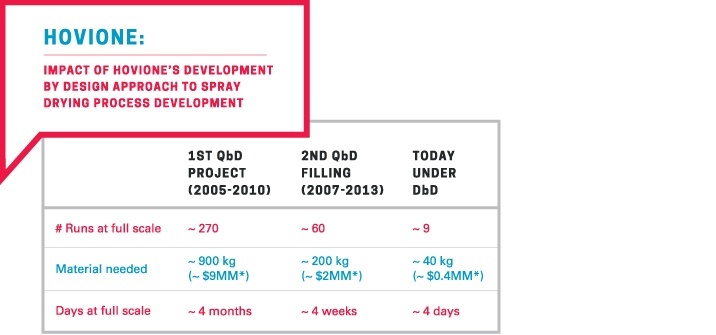
Traditionally, scale-up of spray drying processes, as with many other drug product and drug product intermediate manufacturing technologies, requires considerable testing at scale, consuming tens or even hundreds of kilograms of product — this is a very expensive and time-consuming venture. Recognizing this, we made a concerted effort to reduce the costs and time needed for the development of spray drying processes.

Being a pioneer in the Quality by Design (QbD) initiative was instrumental to Hovione because it forced us to understand the fundamentals of spray drying and build mathematical models for prediction of critical quality attributes of spray dried materials.3 The results, obtained using both statistical and mechanistic approaches, were analyzed and compared. In particular, the impact of thermodynamic behaviors, changing process conditions, drying kinetics and specific process parameters on particle attributes such as size, shape and morphology were modeled. The knowledge about these microscopic properties and behaviors were then correlated to the bulk properties of numerous compounds from an ever-growing database built over many years across all scales, formulation patterns and process conditions.

At Hovione, we believe it is our responsibility, as experts and key providers of emerging technologies, to apply our accumulated knowledge for the benefit of our customers and, ultimately, to the patient looking for new, more efficacious and cost-effective treatment.

Development By Design

Hovione’s focus on learning the underlying principles of spray drying processes resulted in the generation of large quantities of data that now reside in our extensive database. By combining our modeling capabilities with this extensive prior knowledge, it is now possible for Hovione to closely correlate laboratory conditions to those that will be attained at commercial scale. The lab studies are done with minimum product expenditure, and from there we can assure the best scale-up parameters and guarantee results in terms of yields and product attributes. As a result, the time and material needed to establish an effective commercial scale spray drying process are significantly reduced. 

This Hovione approach is referred to as Development by Design (DbD). It is a systematic methodology that involves the use of predictive tools, scale-independent correlations and prior knowledge. It enables Hovione to achieve a great balance between costs and risks, and to reduce the experimental burden of multiple scale-up stages by focusing resources where and when they are really needed.

There Are Four Stages To The DbD Process:

  1. Familiarization, during which scale-independent correlations are established;
  2. Scale-up supported by laboratory data and simulation tools;
  3. Process intensification, during which process throughput and cycle time are optimized while maintaining product properties; and
  4. Commercialization, when the experimental work to define the design space at commercial scale is complete.

Process development in DbD is therefore performed in a stagewise, timely and cost-effective manner using minimal quantities and materials resources, and with guaranteed results. 

Dramatic Results

The development by design approach is benefitting customers of Hovione through a dramatic reduction in the drug substance quantities required and by shortening development times. Rather than tens to hundreds of Kg, as little as 30g may be required for testing.

These results clearly demonstrate that we have been able to combine our modeling skills and extensive process knowledge to accelerate the development and commercialization of drugs. Consequently, we are helping our customers more quickly and cost-effectively deliver needed drugs to patients.

Continuous Improvement for Accelerated Development

With 60% of the novel drugs approved by FDA in 2015 falling into one or more expedited approval categories (Fast Track, Breakthrough Therapy, Accelerated Approval and Priority Review),4 there is tremendous pressure on drug manufacturers to accelerate process development. Under these programs, work that traditionally takes ten years often must be compressed into two or three. Often specialized experience and expertise is required to successfully develop robust and cost-effective processes that assure the same levels of quality.

Hovione’s DbD approach has enabled us to reduce the time and cost to develop robust spray drying processes at any scale. Customers today can have a commercial-scale process within six months and thus deliver novel medicines to the market more quickly.

We remain committed to continually improving our spray drying capabilities. Our ultimate goal is to be able to scale-up spray drying processes with a single confirmation run at manufacturing scale. While this goal will not be achieved in the immediate future, we are determined to work with our sponsors and regulators to make it possible. Part of the effort will involve the thorough demonstration of our ability to develop processes at any scale that are robust and meet the design space built from accumulated knowledge.

References

“Novel Drugs Summary 2015.” U.S. Food and Drug Administration. Jan. 2016. Web.

Williams, Robert O, Alan B. Watts, and Dave A. Miller. Preface. Formulating Poorly Water Soluble Drugs. New York: Springer, 2012. Print.

Newman, Ann, Gregory Knipp, and George Zografi. “Assessing the Performance of Amorphous Solid Dispersions.” Journal of Pharmaceutical Sciences 101.4 (2012): 1355-1377. Web.

Vicente, Joao, Joao Pinto, and Jose Menezes. “Applying Quality by Design to Spray Drying – The Role of Empirical and Mechanistic Modeling.” Chemistry Today. Mar.–Apr. 2013: 32-35. Print.

Originally published on PharmasAlmanac.com on August 1, 2016